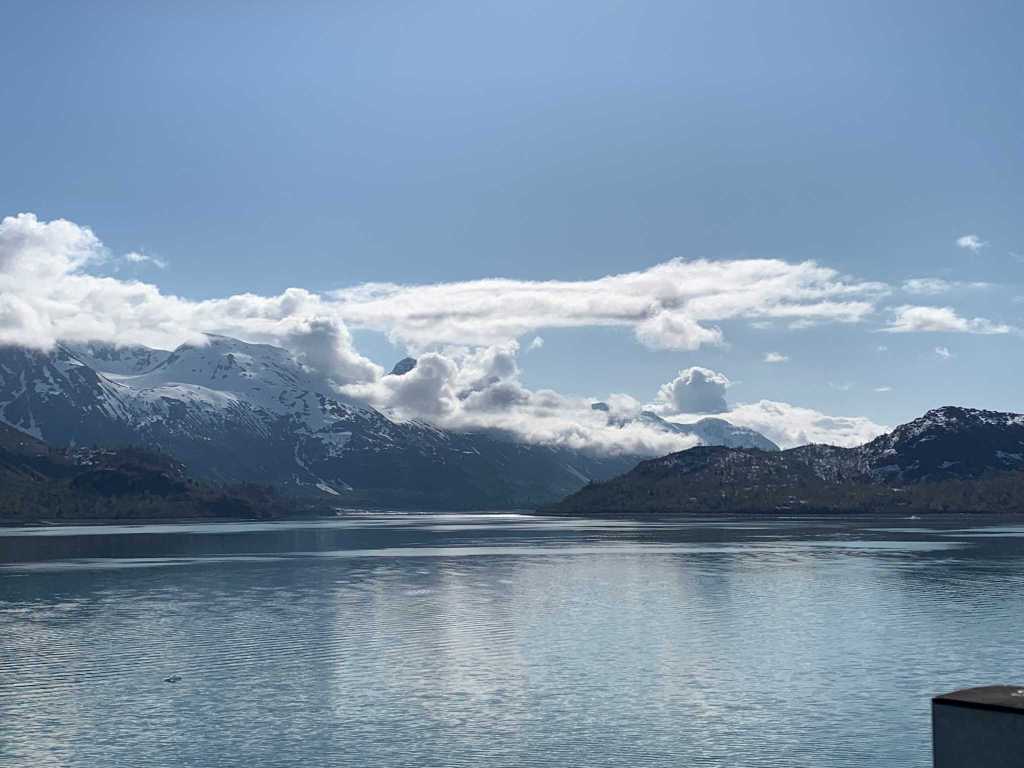
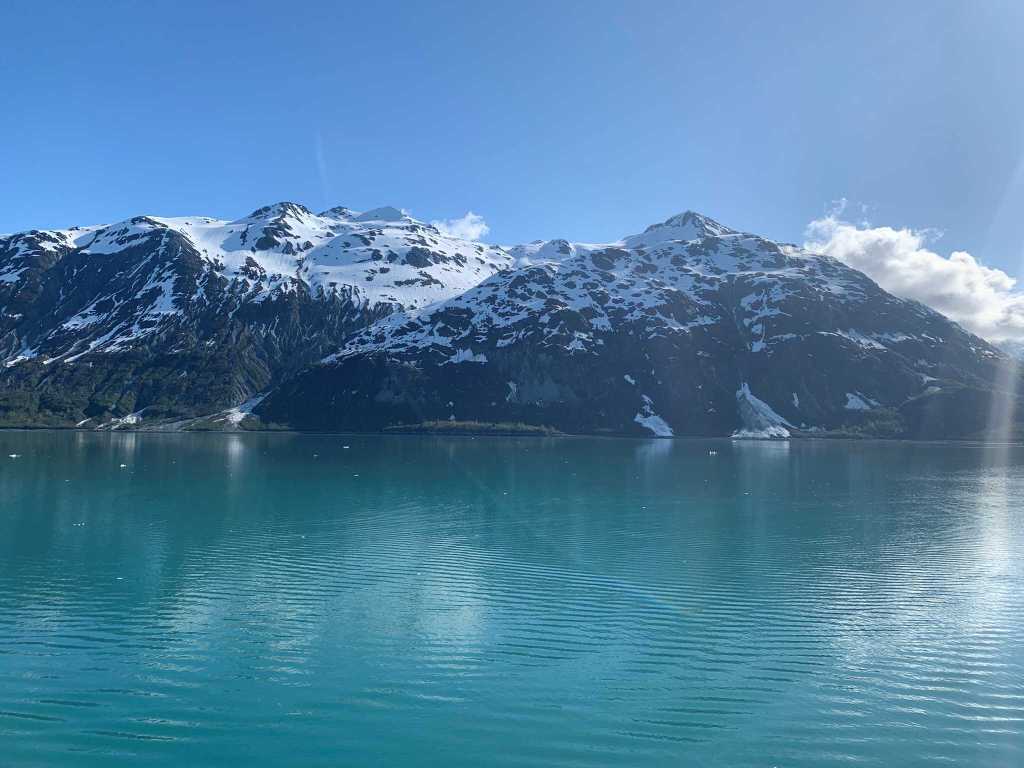
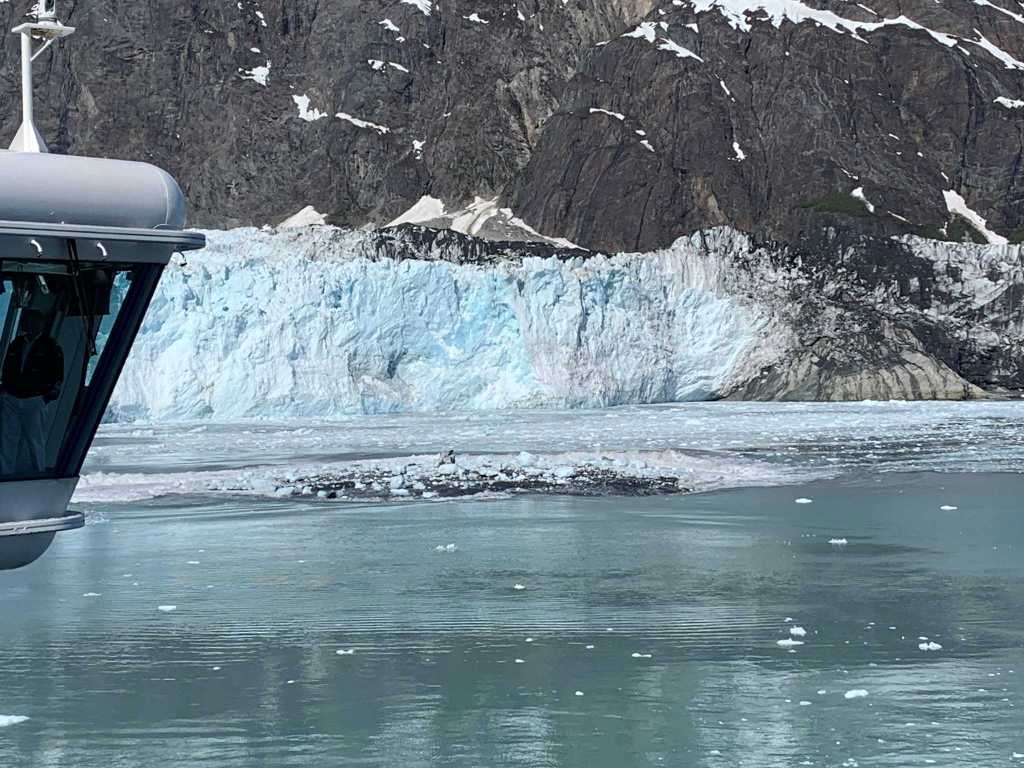
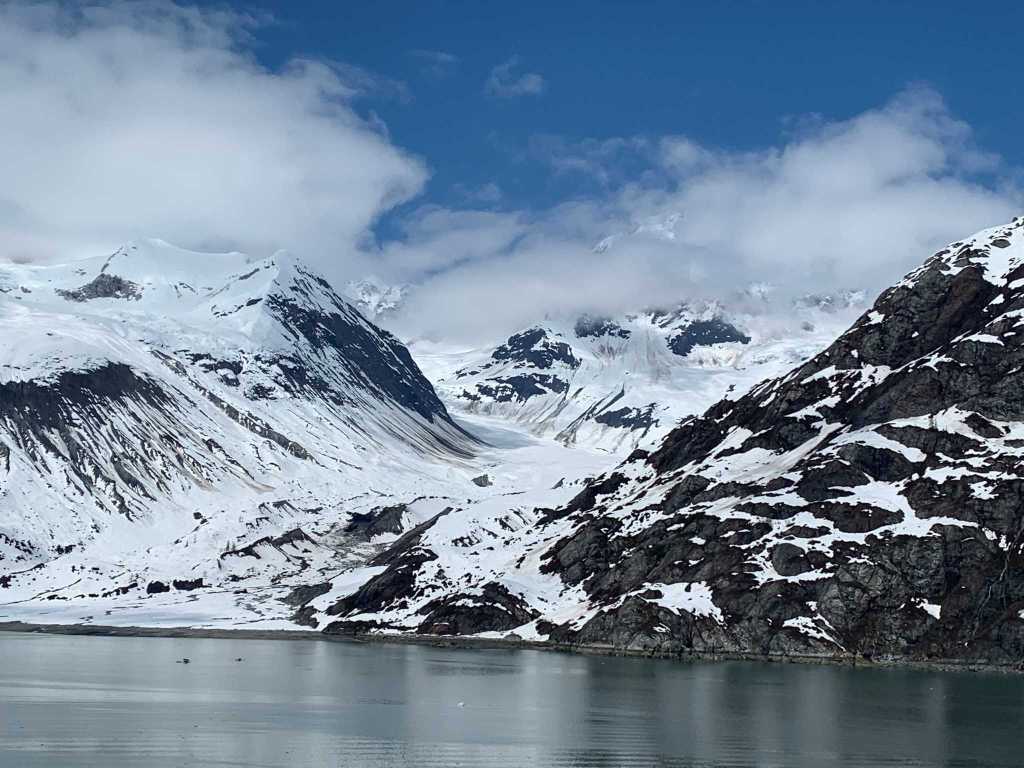
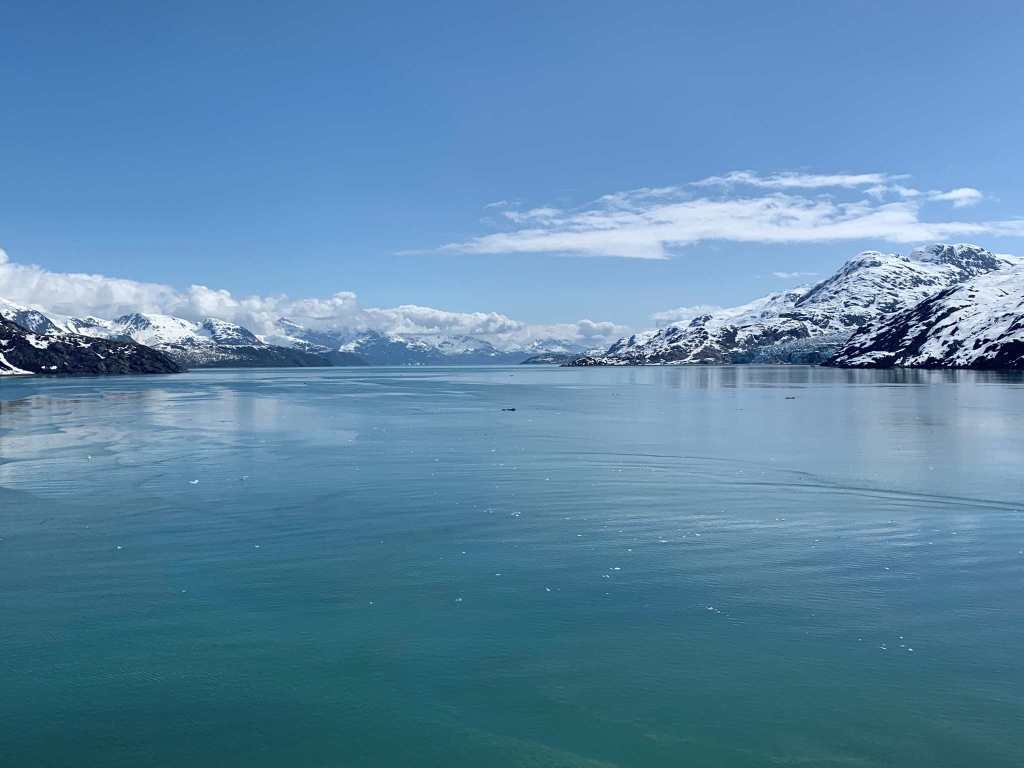
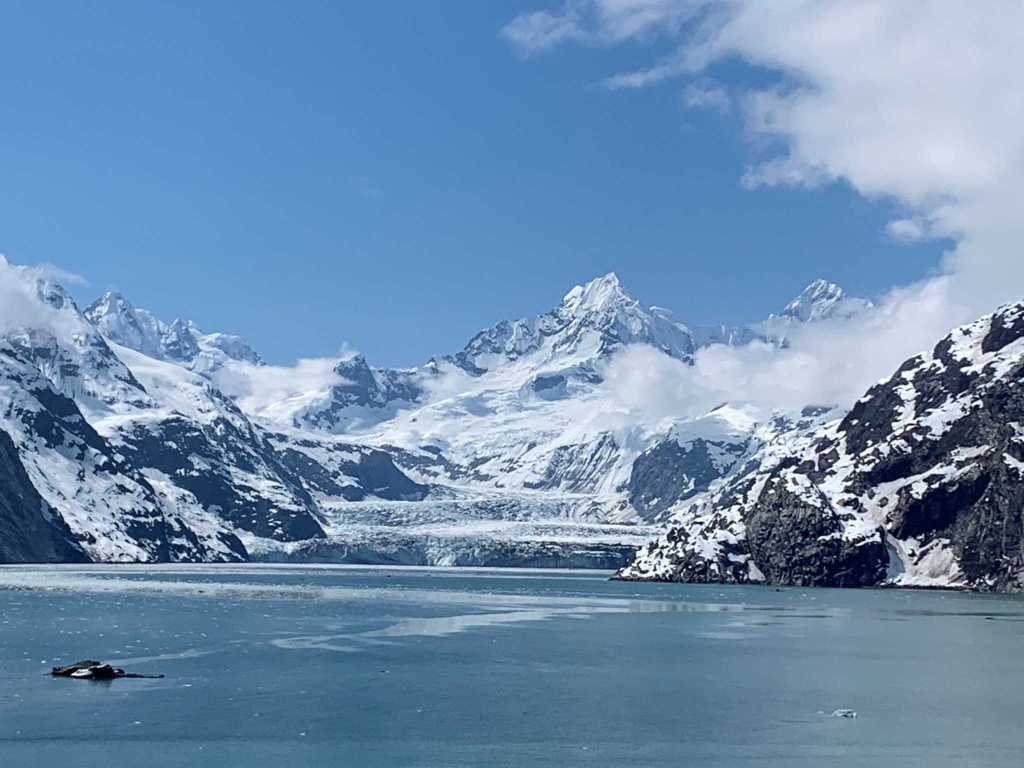
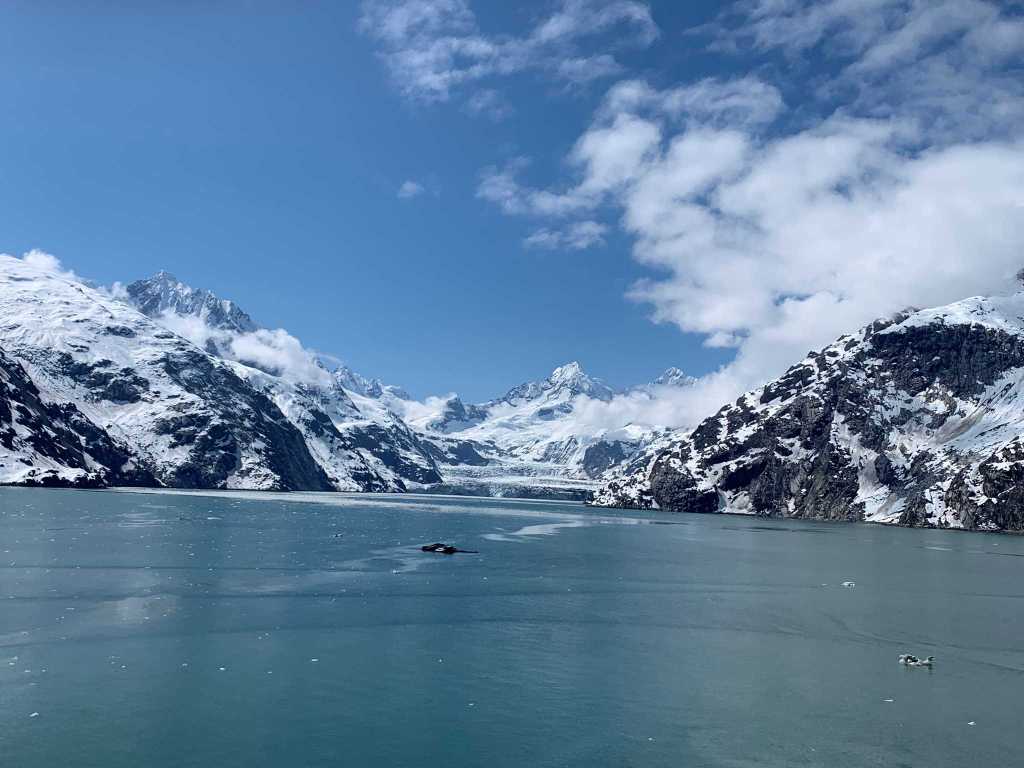
The day started early as we entered Glacier Bay National Park and Preserve, picking up our park rangers on the way in. The weather was chilly with some clouds as we watched for wildlife in the park. Sea otters were plentiful, sometimes in groups numbering as many as twenty. We even were witness to a few whales as we spotted water spouts off in the distance. As we moved further into the bay, the clouds gave way to sunshine–a welcome sight after the previous days’ dreariness. The three glaciers deep in the park we observed were the Grand Pacific Glacier, the Margerie Glacier, and the Johns Hopkins Glacier.


a slowly moving mass or river of ice formed by the accumulation and compaction of snow on mountains or near the poles.
Dictionary.com




(of an iceberg or glacier) split and shed (a smaller mass of ice).
Dictionary.com

As a glacier makes its way down the mountain, it picks up rock and silt called glacier flour. The blue tinge to the ice and the turquoise color of the water at the base of the glacier is due to its highly compacted nature and the glacier flour. Only the blue wavelengths are reflected back for us to see. As the glacier makes its way down the mountain, sheets of ice break off in what is known as calving. We experienced three calvings of the Margerie Glacier during our visit to the park. According to our ship’s captain this is a rarity!
After our day at Glacier Bay, we headed out to the Gulf of Alaska to our final destination and day at sea.

 A Blog about Absolutely Nothing Relevant